In the Studio
His Technique
Stand close to a late Rembrandt and the surface breaks apart into ridges, scratches and smears of pigment. Step back and those marks resolve into skin, breath and thought. Two techniques made it possible, and together they gave his figures an inner life few painters have ever matched.
Light and Dark
Chiaroscuro: directing the eye
Chiaroscuro, Italian for light-dark, is the art of building a picture from strong contrasts of illumination and shadow. Rembrandt absorbed it from his teacher Pieter Lastman and from the Dutch followers of Caravaggio, then made it entirely his own. Instead of lighting a scene evenly, he let a single source, a window, a candle or a hidden lamp, fall where the meaning lies, and allowed everything else to sink into a warm, breathing darkness.
In Philemon and Baucis the light source is hidden altogether. Mercury sits as a dark silhouette against its glow, while the light spills across the table and catches Jupiter's golden robe at the very moment the gods reveal themselves to their elderly hosts. Your eye goes exactly where Rembrandt wants it, and the shadows invite you to imagine what you cannot quite see.

Paint You Can Touch
Impasto: the body of the paint
Impasto is paint laid on so thickly that it stands up from the surface and catches real light. Where many of his contemporaries polished their pictures smooth, Rembrandt built up highlights in heavy, buttery layers, then dragged, scraped and stippled them with brushes, palette knives and even the wooden end of the brush. The early biographer Arnold Houbraken claimed one portrait was so thickly painted that you could lift it off the floor by its nose.
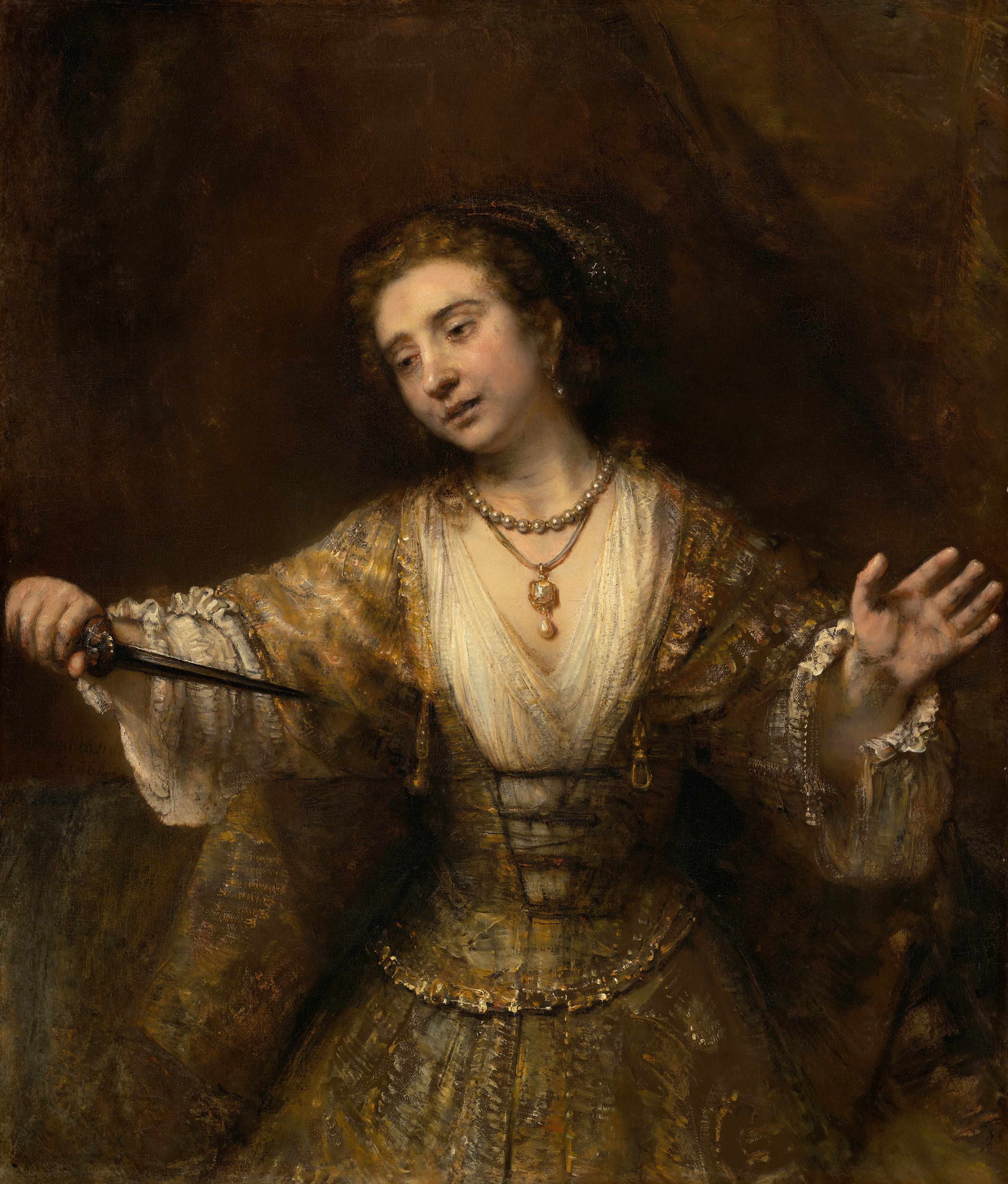
In Lucretia, painted in 1664, he worked the dress near her waist with a palette knife, laying paint in ridges that glitter like gold thread. Elsewhere he blended wet into wet, or dragged a dry brush across the coarse canvas so that its weave shows through. Up close, the gown dissolves into abstract marks. From a few steps away, it shimmers.
The smell of the paint would bother you.
Look Closer
The brush at work
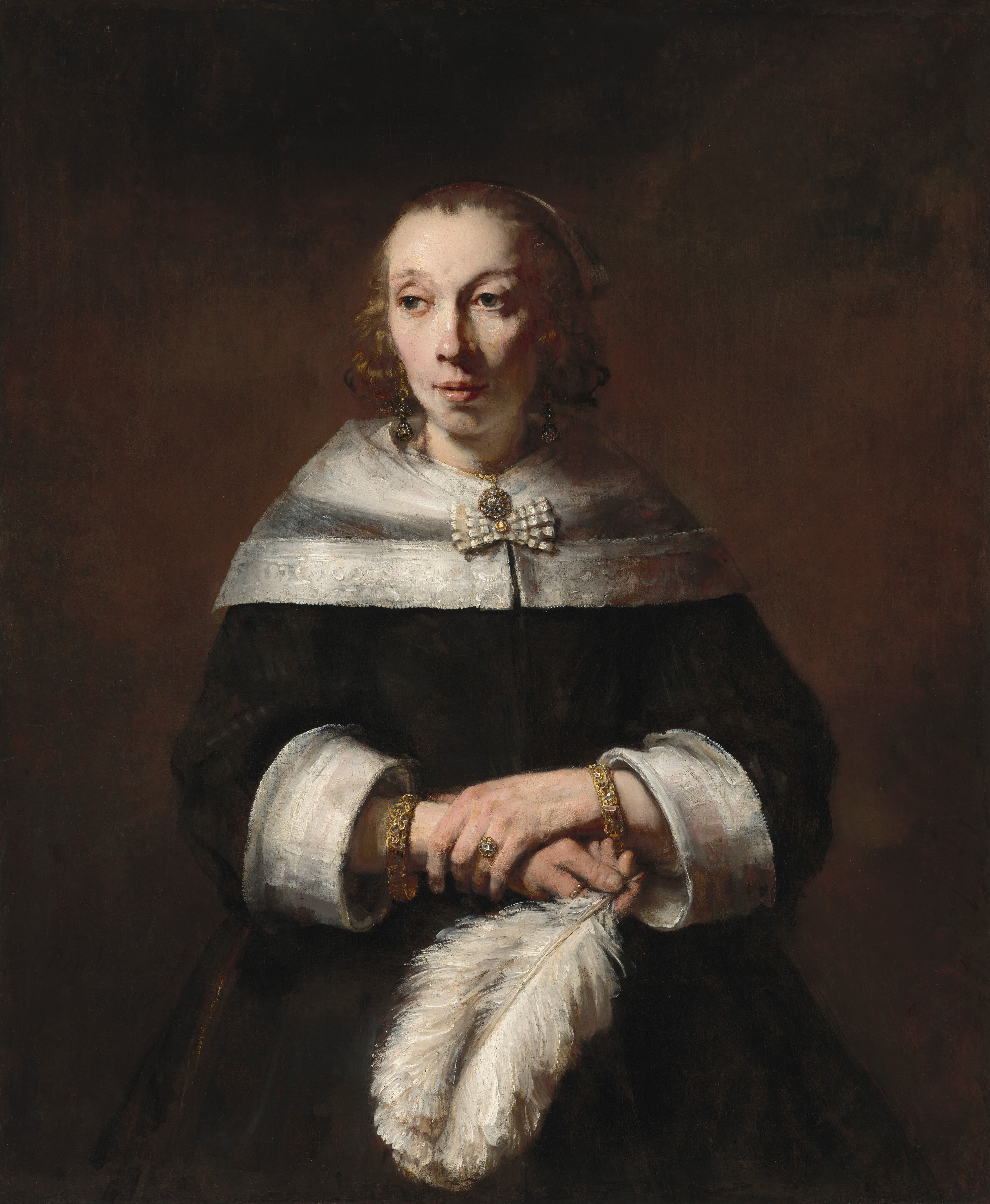
Three more passages from the gallery, enlarged to show how few strokes Rembrandt needed to suggest feather, metal and flesh.


The Inner Life
Psychological realism
Chiaroscuro and impasto were never ends in themselves. Rembrandt aimed his strongest light at faces and hands, the places where thought and feeling show, and gave those passages his richest, most worked paint, while costumes and backgrounds were left loose and dim. The result is a kind of guided attention: we look where he looked, and we stay there.
In the Self-Portrait of 1659, painted the year after his house and possessions were auctioned, light falls on a face built from dense, overlapping strokes, every furrow of the brow and pouch beneath the eye recorded without flattery. Nothing in the costume distracts. What remains is a man taking honest measure of himself, and it is that honesty, more than any trick of light, that makes his people feel alive nearly four centuries later.
A painting is finished when the master has achieved his intention in it.

See for Yourself
Now see them whole
Every detail on this page comes from a painting in the gallery. Step back, take in the whole canvas, and watch the marks come together.